
Sunday, October 07, 2007

Saturday, October 06, 2007

Friday, October 05, 2007


Thursday, October 04, 2007
THE ROAD MAP TO PEACE
I'm enjoying my annual vacation in Washington DC to attend my nephew's birthday party. Last night I went to the Tune Inn, where I joined a couple local advocates, one who works for the ADL and the other for Public Citizen. They collaborated on this map on how to solve the problems in the middle east. Basically, everyone gets out and lets everyone kill each other. The ketchup represents Turkey.

I'm enjoying my annual vacation in Washington DC to attend my nephew's birthday party. Last night I went to the Tune Inn, where I joined a couple local advocates, one who works for the ADL and the other for Public Citizen. They collaborated on this map on how to solve the problems in the middle east. Basically, everyone gets out and lets everyone kill each other. The ketchup represents Turkey.
Sunday, September 16, 2007

Thursday, September 13, 2007

Wednesday, September 12, 2007

Holy shit, my good friend Dave Donihue has a Wikipedia entry! Maybe I'm a nerd, but I'm pretty impressed. I had no idea his middle name is Nelson.
It's a lot better than mine, which is entirely inaccurate. I mean, jesus, they're suggesting I died in 1992? (I was in college, thank you very much.) Still, some of the movie titles they've attributed to me are pretty hilarious.
Good work, Dave.
It's a lot better than mine, which is entirely inaccurate. I mean, jesus, they're suggesting I died in 1992? (I was in college, thank you very much.) Still, some of the movie titles they've attributed to me are pretty hilarious.
Good work, Dave.

Sad new out of Iraq. In what's both a grim reminder and a sad irony, according to Daily Kos, "Two of the seven soldiers who wrote the New York Times op-ed piece criticizing U.S. counterinsurgency strategy 3 ½ weeks ago have been killed in Iraq. Yance T. Gray and Omar Mora died Monday in a vehicle accident in Baghdad."
What they had to say is important, so I'll save it from being behind the New York Times' pay wall.
The Iraq war as we see it
Seven U.S. soldiers speak
Sunday, August 19, 2007
<A HREF="http://ad.doubleclick.net/click%3Bh=v8/35cc/3/0/%2a/p%3B34953186%3B2-0%3B0%3B4942971%3B933-120/600%3B16756482/16774377/1%3B%3B%7Esscs%3D%3fhttp%3A%2F%2Fwww.iht.com/pages/properties/index.php" TARGET="_blank"><IMG SRC="http://m1.2mdn.net/518758/2198_Prop_Comp_SKY_Final.gif" WIDTH="120" HEIGHT="600" ALT="Click here..." BORDER="0"></a>
BAGHDAD: Viewed from Iraq at the tail end of a 15-month deployment, the political debate in Washington is surreal.
Counterinsurgency is, by definition, a competition between insurgents and counterinsurgents for the control and support of a population. To believe that Americans, with an occupying force that long ago outlived its reluctant welcome, can win over a recalcitrant local population and win this counterinsurgency is far-fetched.
As responsible infantrymen and noncommissioned officers with the 82nd Airborne Division soon heading back home, we are skeptical of recent press coverage portraying the conflict as increasingly manageable and feel it has neglected the mounting civil, political and social unrest we see every day. (Obviously, these are our personal views and should not be seen as official within our chain of command.)
The claim that we are increasingly in control of the battlefields in Iraq is an assessment arrived at through a flawed, American-centered framework. Yes, we are militarily superior, but our successes are offset by failures elsewhere. What soldiers call the "battle space" remains the same, with changes only at the margins.
It is crowded with actors who do not fit neatly into boxes: Sunni extremists, Al Qaeda terrorists, Shiite militiamen, criminals and armed tribes. This situation is made more complex by the questionable loyalties and Janus-faced role of the Iraqi police and Iraqi Army, which have been trained and armed at U.S. taxpayers' expense.
A few nights ago, for example, we witnessed the death of one American soldier and the critical wounding of two others when a lethal armor-piercing explosive was detonated between an Iraqi Army checkpoint and a police one. Local Iraqis readily testified to American investigators that Iraqi police and army officers escorted the triggermen and helped plant the bomb. These civilians highlighted their own predicament: Had they informed the Americans of the bomb before the incident, the Iraqi Army, the police or the local Shiite militia would have killed their families.
As many grunts will tell you, this is a near-routine event. Reports that a majority of Iraqi army commanders are now reliable partners can be considered only misleading rhetoric. The truth is that battalion commanders, even if well meaning, have little to no influence over the thousands of obstinate men under them, in an incoherent chain of command, who are really loyal only to their militias.
Similarly, Sunnis, who have been underrepresented in the new Iraqi armed forces, now find themselves forming militias, sometimes with our tacit support. Sunnis recognize that the best guarantee they may have against Shiite militias and the Shiite-dominated government is to form their own armed bands. We arm them to aid in our fight against Al Qaeda.
However, while creating proxies is essential in winning a counterinsurgency, it requires that the proxies are loyal to the center that we claim to support. Armed Sunni tribes have indeed become effective surrogates, but the enduring question is where their loyalties would lie in our absence. The Iraqi government finds itself working at cross purposes with us on this issue because it is justifiably fearful that Sunni militias will turn on it should the Americans leave.
In short, we operate in a bewildering context of determined enemies and questionable allies, one where the balance of forces on the ground remains entirely unclear. (In the course of writing this article, this fact became all too clear: One of us, Staff Sergeant Murphy, a U.S. Army Ranger and reconnaissance team leader, was shot in the head during a "time-sensitive target acquisition mission" on August 12; he is expected to survive and is being flown to a military hospital in the United States.) While we have the will and the resources to fight in this context, we are effectively hamstrung because realities on the ground require measures we will always refuse - namely, the widespread use of lethal and brutal force.
Given the situation, it is important not to assess security from an American-centered perspective. The ability of, say, American observers to safely walk down the streets of formerly violent towns is not a resounding indicator of security. What matters is the experience of the local citizenry and the future of our counterinsurgency. When we take this view, we see that a vast majority of Iraqis feel increasingly insecure and view us as an occupation force that has failed to produce normalcy after four years and is increasingly unlikely to do so as we continue to arm each warring side.
Coupling our military strategy to an insistence that the Iraqis meet political benchmarks for reconciliation is also unhelpful. The morass in the government has fueled confusion while providing no semblance of security to average Iraqis. Leaders are far from arriving at a lasting political settlement. This should not be surprising, since a lasting political solution will not be possible while the military situation remains in flux.
The Iraqi government is run by the main coalition partners of the Shiite-dominated United Iraqi Alliance, with Kurds as minority members. The Shiite clerical establishment formed the alliance to make sure its people did not succumb to the same mistake as in 1920: rebelling against the British and losing what they believed was their inherent right to rule Iraq as the majority. The qualified and reluctant welcome we received from the Shiites since the invasion has to be seen in that historical context. They saw in us something useful for the moment.
Now that moment is passing, as the Shiites have achieved what they believe is rightfully theirs. Their next task is to figure out how best to consolidate the gains, because reconciliation without consolidation risks losing it all. Washington's insistence that the Iraqis correct the three gravest mistakes we made - de-Baathification, the dismantling of the Iraqi Army and the creation of a loose federalist system of government - places us at cross purposes with the government we have committed to support.
Political reconciliation in Iraq will occur, but not at our insistence or in ways that meet our benchmarks. It will happen on Iraqi terms when the reality on the battlefield is congruent with that in the political sphere. There will be no magnanimous solutions that please every party the way we expect, and there will be winners and losers. The choice we have left is to decide which side we will take. Trying to please every party - as we do now - will only ensure we are hated by all in the long run.
The most important front in the counterinsurgency, improving basic social and economic conditions, is the one on which we have failed most miserably. Two million Iraqis are in refugee camps in bordering countries. Close to two million more are internally displaced and now fill many urban slums. Cities lack regular electricity, telephone services and sanitation. "Lucky" Iraqis live in communities barricaded with concrete walls that provide them with a sense of communal claustrophobia rather than any sense of security we would consider normal. In an environment where men with guns rule the streets, engaging in the banalities of life has become a death-defying act.
Four years into our occupation, we have failed on every promise, while we have substituted Baath Party tyranny with a tyranny of Islamist, militia and criminal violence. When the primary preoccupation of average Iraqis is when and how they are likely to be killed, we can hardly feel smug as we hand out care packages. As an Iraqi man told us a few days ago with deep resignation, "We need security, not free food."
In the end, we need to recognize that our presence may have released Iraqis from the grip of a tyrant, but that it has also robbed them of their self-respect. They will soon realize that the best way to regain dignity is to call us what we are - an army of occupation - and force our withdrawal.
Until that happens, it would be prudent for us to increasingly let Iraqis take center stage in all matters, to come up with a nuanced policy in which we assist them from the margins but let them resolve their differences as they see fit. This suggestion is not meant to be defeatist, but rather to highlight our pursuit of incompatible policies to absurd ends without recognizing the incongruities.
We need not talk about our morale. As committed soldiers, we will see this mission through.
Buddhika Jayamaha is a U.S. Army specialist. Wesley D. Smith is a sergeant. Jeremy Roebuck is a sergeant. Omar Mora is a sergeant. Edward Sandmeier is a sergeant. Yance T. Gray is a staff sergeant. Jeremy A. Murphy is a staff sergeant.
What they had to say is important, so I'll save it from being behind the New York Times' pay wall.
The Iraq war as we see it
Seven U.S. soldiers speak
Sunday, August 19, 2007
<A HREF="http://ad.doubleclick.net/click%3Bh=v8/35cc/3/0/%2a/p%3B34953186%3B2-0%3B0%3B4942971%3B933-120/600%3B16756482/16774377/1%3B%3B%7Esscs%3D%3fhttp%3A%2F%2Fwww.iht.com/pages/properties/index.php" TARGET="_blank"><IMG SRC="http://m1.2mdn.net/518758/2198_Prop_Comp_SKY_Final.gif" WIDTH="120" HEIGHT="600" ALT="Click here..." BORDER="0"></a>
BAGHDAD: Viewed from Iraq at the tail end of a 15-month deployment, the political debate in Washington is surreal.
Counterinsurgency is, by definition, a competition between insurgents and counterinsurgents for the control and support of a population. To believe that Americans, with an occupying force that long ago outlived its reluctant welcome, can win over a recalcitrant local population and win this counterinsurgency is far-fetched.
As responsible infantrymen and noncommissioned officers with the 82nd Airborne Division soon heading back home, we are skeptical of recent press coverage portraying the conflict as increasingly manageable and feel it has neglected the mounting civil, political and social unrest we see every day. (Obviously, these are our personal views and should not be seen as official within our chain of command.)
The claim that we are increasingly in control of the battlefields in Iraq is an assessment arrived at through a flawed, American-centered framework. Yes, we are militarily superior, but our successes are offset by failures elsewhere. What soldiers call the "battle space" remains the same, with changes only at the margins.
It is crowded with actors who do not fit neatly into boxes: Sunni extremists, Al Qaeda terrorists, Shiite militiamen, criminals and armed tribes. This situation is made more complex by the questionable loyalties and Janus-faced role of the Iraqi police and Iraqi Army, which have been trained and armed at U.S. taxpayers' expense.
A few nights ago, for example, we witnessed the death of one American soldier and the critical wounding of two others when a lethal armor-piercing explosive was detonated between an Iraqi Army checkpoint and a police one. Local Iraqis readily testified to American investigators that Iraqi police and army officers escorted the triggermen and helped plant the bomb. These civilians highlighted their own predicament: Had they informed the Americans of the bomb before the incident, the Iraqi Army, the police or the local Shiite militia would have killed their families.
As many grunts will tell you, this is a near-routine event. Reports that a majority of Iraqi army commanders are now reliable partners can be considered only misleading rhetoric. The truth is that battalion commanders, even if well meaning, have little to no influence over the thousands of obstinate men under them, in an incoherent chain of command, who are really loyal only to their militias.
Similarly, Sunnis, who have been underrepresented in the new Iraqi armed forces, now find themselves forming militias, sometimes with our tacit support. Sunnis recognize that the best guarantee they may have against Shiite militias and the Shiite-dominated government is to form their own armed bands. We arm them to aid in our fight against Al Qaeda.
However, while creating proxies is essential in winning a counterinsurgency, it requires that the proxies are loyal to the center that we claim to support. Armed Sunni tribes have indeed become effective surrogates, but the enduring question is where their loyalties would lie in our absence. The Iraqi government finds itself working at cross purposes with us on this issue because it is justifiably fearful that Sunni militias will turn on it should the Americans leave.
In short, we operate in a bewildering context of determined enemies and questionable allies, one where the balance of forces on the ground remains entirely unclear. (In the course of writing this article, this fact became all too clear: One of us, Staff Sergeant Murphy, a U.S. Army Ranger and reconnaissance team leader, was shot in the head during a "time-sensitive target acquisition mission" on August 12; he is expected to survive and is being flown to a military hospital in the United States.) While we have the will and the resources to fight in this context, we are effectively hamstrung because realities on the ground require measures we will always refuse - namely, the widespread use of lethal and brutal force.
Given the situation, it is important not to assess security from an American-centered perspective. The ability of, say, American observers to safely walk down the streets of formerly violent towns is not a resounding indicator of security. What matters is the experience of the local citizenry and the future of our counterinsurgency. When we take this view, we see that a vast majority of Iraqis feel increasingly insecure and view us as an occupation force that has failed to produce normalcy after four years and is increasingly unlikely to do so as we continue to arm each warring side.
Coupling our military strategy to an insistence that the Iraqis meet political benchmarks for reconciliation is also unhelpful. The morass in the government has fueled confusion while providing no semblance of security to average Iraqis. Leaders are far from arriving at a lasting political settlement. This should not be surprising, since a lasting political solution will not be possible while the military situation remains in flux.
The Iraqi government is run by the main coalition partners of the Shiite-dominated United Iraqi Alliance, with Kurds as minority members. The Shiite clerical establishment formed the alliance to make sure its people did not succumb to the same mistake as in 1920: rebelling against the British and losing what they believed was their inherent right to rule Iraq as the majority. The qualified and reluctant welcome we received from the Shiites since the invasion has to be seen in that historical context. They saw in us something useful for the moment.
Now that moment is passing, as the Shiites have achieved what they believe is rightfully theirs. Their next task is to figure out how best to consolidate the gains, because reconciliation without consolidation risks losing it all. Washington's insistence that the Iraqis correct the three gravest mistakes we made - de-Baathification, the dismantling of the Iraqi Army and the creation of a loose federalist system of government - places us at cross purposes with the government we have committed to support.
Political reconciliation in Iraq will occur, but not at our insistence or in ways that meet our benchmarks. It will happen on Iraqi terms when the reality on the battlefield is congruent with that in the political sphere. There will be no magnanimous solutions that please every party the way we expect, and there will be winners and losers. The choice we have left is to decide which side we will take. Trying to please every party - as we do now - will only ensure we are hated by all in the long run.
The most important front in the counterinsurgency, improving basic social and economic conditions, is the one on which we have failed most miserably. Two million Iraqis are in refugee camps in bordering countries. Close to two million more are internally displaced and now fill many urban slums. Cities lack regular electricity, telephone services and sanitation. "Lucky" Iraqis live in communities barricaded with concrete walls that provide them with a sense of communal claustrophobia rather than any sense of security we would consider normal. In an environment where men with guns rule the streets, engaging in the banalities of life has become a death-defying act.
Four years into our occupation, we have failed on every promise, while we have substituted Baath Party tyranny with a tyranny of Islamist, militia and criminal violence. When the primary preoccupation of average Iraqis is when and how they are likely to be killed, we can hardly feel smug as we hand out care packages. As an Iraqi man told us a few days ago with deep resignation, "We need security, not free food."
In the end, we need to recognize that our presence may have released Iraqis from the grip of a tyrant, but that it has also robbed them of their self-respect. They will soon realize that the best way to regain dignity is to call us what we are - an army of occupation - and force our withdrawal.
Until that happens, it would be prudent for us to increasingly let Iraqis take center stage in all matters, to come up with a nuanced policy in which we assist them from the margins but let them resolve their differences as they see fit. This suggestion is not meant to be defeatist, but rather to highlight our pursuit of incompatible policies to absurd ends without recognizing the incongruities.
We need not talk about our morale. As committed soldiers, we will see this mission through.
Buddhika Jayamaha is a U.S. Army specialist. Wesley D. Smith is a sergeant. Jeremy Roebuck is a sergeant. Omar Mora is a sergeant. Edward Sandmeier is a sergeant. Yance T. Gray is a staff sergeant. Jeremy A. Murphy is a staff sergeant.
Wednesday, September 05, 2007

Saturday, August 25, 2007

Friday, August 24, 2007

Tuesday, August 21, 2007

I'm loving BulletProof Baby. It's baby-wear for the whole militia.
It's a shame the best stuff -- i.e. the least offensive and insane, like the camo jacket -- is out of stock. My nephew turns two in a month, and "my first riot helmet" is out of my price range.
Check out the product demo for the bullet-proff stroller:
I do believe that kid survived live rounds. Hard core.
Saturday, August 18, 2007


Friday, August 17, 2007


Wednesday, August 08, 2007

Monday, July 30, 2007

Sunday, July 29, 2007
OH JESUS...


Flat Daddy.
If you’re reading this page it’s probably because you’ve heard about Flat Daddy™ and the wonderful way it’s being used to help children stay connected to a deployed parent. He’s also filling the “blank space” in family occasion photos, event and trips. Just look at the pictures to see all the places he’s been! It’s exciting.
...
Cindy, and her 19 month old daughter Sarah, introduce you to Flat Daddy™. Three months after Sarah’s dad was deployed, Cindy took a "waist up" photo (highest quality 8x10 color photo) of him, dressed in fatigues, to a local print shop (see #2 below). They enlarged it to life size (see #1 below for how to determine the finished size of the figure) and mounted it on foam board (see #3 below) - like a big, two-dimensional paper doll. "He was missing so many family gatherings" said Cindy. So, Flat Daddy™ traveled to graduations, weddings, and other celebrations where he took his rightful place in the photographs (see #4 below). Copies of the photos were sent to Daddy overseas so he could see where he'd traveled. Cindy keeps an album at home of everywhere Flat Daddy™ has been...even tucking Sarah into bed. Speaking of Sarah, real Daddy received a Flat Sarah, minus the foam board, so he could see how much she'd grown.
I tell myself, this can't be real. But it is, isn't it? People are actually using cardboard stand-ups of soldiers. Do they do this with the deceased, as well? God, that's morbid.


Flat Daddy.
If you’re reading this page it’s probably because you’ve heard about Flat Daddy™ and the wonderful way it’s being used to help children stay connected to a deployed parent. He’s also filling the “blank space” in family occasion photos, event and trips. Just look at the pictures to see all the places he’s been! It’s exciting.
...
Cindy, and her 19 month old daughter Sarah, introduce you to Flat Daddy™. Three months after Sarah’s dad was deployed, Cindy took a "waist up" photo (highest quality 8x10 color photo) of him, dressed in fatigues, to a local print shop (see #2 below). They enlarged it to life size (see #1 below for how to determine the finished size of the figure) and mounted it on foam board (see #3 below) - like a big, two-dimensional paper doll. "He was missing so many family gatherings" said Cindy. So, Flat Daddy™ traveled to graduations, weddings, and other celebrations where he took his rightful place in the photographs (see #4 below). Copies of the photos were sent to Daddy overseas so he could see where he'd traveled. Cindy keeps an album at home of everywhere Flat Daddy™ has been...even tucking Sarah into bed. Speaking of Sarah, real Daddy received a Flat Sarah, minus the foam board, so he could see how much she'd grown.
I tell myself, this can't be real. But it is, isn't it? People are actually using cardboard stand-ups of soldiers. Do they do this with the deceased, as well? God, that's morbid.
Friday, July 27, 2007

Friday, July 20, 2007
This is so fucking criminal it redefines the term. Let's just publish the whole thing, shall we?
Bush administration officials unveiled a bold new assertion of executive authority yesterday in the dispute over the firing of nine U.S. attorneys, saying that the Justice Department will never be allowed to pursue contempt charges initiated by Congress against White House officials once the president has invoked executive privilege.
The position presents serious legal and political obstacles for congressional Democrats, who have begun laying the groundwork for contempt proceedings against current and former White House officials in order to pry loose information about the dismissals.
Under federal law, a statutory contempt citation by the House or Senate must be submitted to the U.S. attorney for the District of Columbia, "whose duty it shall be to bring the matter before the grand jury for its action."
But administration officials argued yesterday that Congress has no power to force a U.S. attorney to pursue contempt charges in cases, such as the prosecutor firings, in which the president has declared that testimony or documents are protected from release by executive privilege. Officials pointed to a Justice Department legal opinion during the Reagan administration, which made the same argument in a case that was never resolved by the courts.
"A U.S. attorney would not be permitted to bring contempt charges or convene a grand jury in an executive privilege case," said a senior official, who said his remarks reflect a consensus within the administration. "And a U.S. attorney wouldn't be permitted to argue against the reasoned legal opinion that the Justice Department provided. No one should expect that to happen."
The official, who spoke on the condition of anonymity because he was not authorized to discuss the issue publicly, added: "It has long been understood that, in circumstances like these, the constitutional prerogatives of the president would make it a futile and purely political act for Congress to refer contempt citations to U.S. attorneys."
Mark J. Rozell, a professor of public policy at George Mason University who has written a book on executive-privilege issues, called the administration's stance "astonishing."
"That's a breathtakingly broad view of the president's role in this system of separation of powers," Rozell said. "What this statement is saying is the president's claim of executive privilege trumps all."
The administration's statement is a dramatic attempt to seize the upper hand in an escalating constitutional battle with Congress, which has been trying for months, without success, to compel White House officials to testify and to turn over documents about their roles in the prosecutor firings last year. The Justice Department and White House in recent weeks have been discussing when and how to disclose the stance, and the official said he decided yesterday that it was time to highlight it.
Yesterday, a House Judiciary subcommittee voted to lay the groundwork for contempt proceedings against White House chief of staff Joshua B. Bolten, following a similar decision last week against former White House counsel Harriet E. Miers.
The administration has not directly informed Congress of its view. A spokeswoman for Rep. John Conyers Jr. (D-Mich.), the Judiciary Committee's chairman, declined to comment . But other leading Democrats attacked the argument.
Senate Majority Leader Harry M. Reid (D-Nev.) called it "an outrageous abuse of executive privilege" and said: "The White House must stop stonewalling and start being accountable to Congress and the American people. No one, including the president, is above the law."
Sen. Charles E. Schumer (N.Y.) said the administration is "hastening a constitutional crisis," and Rep. Henry A. Waxman (D-Calif.) said the position "makes a mockery of the ideal that no one is above the law."
Waxman added: "I suppose the next step would be just disbanding the Justice Department."
Under long-established procedures and laws, the House and Senate can each pursue two kinds of criminal contempt proceedings, and the Senate also has a civil contempt option. The first, called statutory contempt, has been the avenue most frequently pursued in modern times, and is the one that requires a referral to the U.S. attorney in the District.
Both chambers also have an "inherent contempt" power, allowing either body to hold its own trials and even jail those found in defiance of Congress. Although widely used during the 19th century, the power has not been invoked since 1934 and Democratic lawmakers have not displayed an appetite for reviving the practice.
In defending its argument, administration officials point to a 1984 opinion by the Justice Department's Office of Legal Counsel, headed at the time by Theodore B. Olson, a prominent conservative lawyer who was solicitor general from 2001 to 2004. The opinion centered on a contempt citation issued by the House for Anne Gorsuch Burford, then administrator of the Environmental Protection Agency.
It concluded: "The President, through a United States Attorney, need not, indeed may not, prosecute criminally a subordinate for asserting on his behalf a claim of executive privilege. Nor could the Legislative Branch or the courts require or implement the prosecution of such an individual."
In the Burford case, which involved spending on the Superfund program, the White House filed a federal lawsuit to block Congress's contempt action. The conflict subsided when Burford turned over documents to Congress.
The Bush administration has not previously signaled it would forbid a U.S. attorney from pursuing a contempt case in relation to the prosecutor firings. But officials at Justice and elsewhere say it has long held that Congress cannot force such action.
David B. Rifkin, who worked in the Justice Department and White House counsel's office under presidents Ronald Reagan and George H.W. Bush, praised the position and said it is consistent with the idea of a "unitary executive." In practical terms, he said, "U.S. attorneys are emanations of a president's will." And in constitutional terms, he said, "the president has decided, by virtue of invoking executive privilege, that is the correct policy for the entire executive branch."
But Stanley Brand, who was the Democratic House counsel during the Burford case, said the administration's legal view "turns the constitutional enforcement process on its head. They are saying they will always place a claim of presidential privilege without any judicial determination above a congressional demand for evidence -- without any basis in law." Brand said the position is essentially telling Congress: "Because we control the enforcement process, we are going to thumb our nose at you."
Rozell, the George Mason professor and authority on executive privilege, said the administration's stance "is almost Nixonian in its scope and breadth of interpreting its power. Congress has no recourse at all, in the president's view. . . . It's allowing the executive to define the scope and limits of its own powers."
We;re not heading toward a constitutional crisis. We're in one. Congress needs to grow some balls and make this fight ugly and public.
Bush administration officials unveiled a bold new assertion of executive authority yesterday in the dispute over the firing of nine U.S. attorneys, saying that the Justice Department will never be allowed to pursue contempt charges initiated by Congress against White House officials once the president has invoked executive privilege.
The position presents serious legal and political obstacles for congressional Democrats, who have begun laying the groundwork for contempt proceedings against current and former White House officials in order to pry loose information about the dismissals.
Under federal law, a statutory contempt citation by the House or Senate must be submitted to the U.S. attorney for the District of Columbia, "whose duty it shall be to bring the matter before the grand jury for its action."
But administration officials argued yesterday that Congress has no power to force a U.S. attorney to pursue contempt charges in cases, such as the prosecutor firings, in which the president has declared that testimony or documents are protected from release by executive privilege. Officials pointed to a Justice Department legal opinion during the Reagan administration, which made the same argument in a case that was never resolved by the courts.
"A U.S. attorney would not be permitted to bring contempt charges or convene a grand jury in an executive privilege case," said a senior official, who said his remarks reflect a consensus within the administration. "And a U.S. attorney wouldn't be permitted to argue against the reasoned legal opinion that the Justice Department provided. No one should expect that to happen."
The official, who spoke on the condition of anonymity because he was not authorized to discuss the issue publicly, added: "It has long been understood that, in circumstances like these, the constitutional prerogatives of the president would make it a futile and purely political act for Congress to refer contempt citations to U.S. attorneys."
Mark J. Rozell, a professor of public policy at George Mason University who has written a book on executive-privilege issues, called the administration's stance "astonishing."
"That's a breathtakingly broad view of the president's role in this system of separation of powers," Rozell said. "What this statement is saying is the president's claim of executive privilege trumps all."
The administration's statement is a dramatic attempt to seize the upper hand in an escalating constitutional battle with Congress, which has been trying for months, without success, to compel White House officials to testify and to turn over documents about their roles in the prosecutor firings last year. The Justice Department and White House in recent weeks have been discussing when and how to disclose the stance, and the official said he decided yesterday that it was time to highlight it.
Yesterday, a House Judiciary subcommittee voted to lay the groundwork for contempt proceedings against White House chief of staff Joshua B. Bolten, following a similar decision last week against former White House counsel Harriet E. Miers.
The administration has not directly informed Congress of its view. A spokeswoman for Rep. John Conyers Jr. (D-Mich.), the Judiciary Committee's chairman, declined to comment . But other leading Democrats attacked the argument.
Senate Majority Leader Harry M. Reid (D-Nev.) called it "an outrageous abuse of executive privilege" and said: "The White House must stop stonewalling and start being accountable to Congress and the American people. No one, including the president, is above the law."
Sen. Charles E. Schumer (N.Y.) said the administration is "hastening a constitutional crisis," and Rep. Henry A. Waxman (D-Calif.) said the position "makes a mockery of the ideal that no one is above the law."
Waxman added: "I suppose the next step would be just disbanding the Justice Department."
Under long-established procedures and laws, the House and Senate can each pursue two kinds of criminal contempt proceedings, and the Senate also has a civil contempt option. The first, called statutory contempt, has been the avenue most frequently pursued in modern times, and is the one that requires a referral to the U.S. attorney in the District.
Both chambers also have an "inherent contempt" power, allowing either body to hold its own trials and even jail those found in defiance of Congress. Although widely used during the 19th century, the power has not been invoked since 1934 and Democratic lawmakers have not displayed an appetite for reviving the practice.
In defending its argument, administration officials point to a 1984 opinion by the Justice Department's Office of Legal Counsel, headed at the time by Theodore B. Olson, a prominent conservative lawyer who was solicitor general from 2001 to 2004. The opinion centered on a contempt citation issued by the House for Anne Gorsuch Burford, then administrator of the Environmental Protection Agency.
It concluded: "The President, through a United States Attorney, need not, indeed may not, prosecute criminally a subordinate for asserting on his behalf a claim of executive privilege. Nor could the Legislative Branch or the courts require or implement the prosecution of such an individual."
In the Burford case, which involved spending on the Superfund program, the White House filed a federal lawsuit to block Congress's contempt action. The conflict subsided when Burford turned over documents to Congress.
The Bush administration has not previously signaled it would forbid a U.S. attorney from pursuing a contempt case in relation to the prosecutor firings. But officials at Justice and elsewhere say it has long held that Congress cannot force such action.
David B. Rifkin, who worked in the Justice Department and White House counsel's office under presidents Ronald Reagan and George H.W. Bush, praised the position and said it is consistent with the idea of a "unitary executive." In practical terms, he said, "U.S. attorneys are emanations of a president's will." And in constitutional terms, he said, "the president has decided, by virtue of invoking executive privilege, that is the correct policy for the entire executive branch."
But Stanley Brand, who was the Democratic House counsel during the Burford case, said the administration's legal view "turns the constitutional enforcement process on its head. They are saying they will always place a claim of presidential privilege without any judicial determination above a congressional demand for evidence -- without any basis in law." Brand said the position is essentially telling Congress: "Because we control the enforcement process, we are going to thumb our nose at you."
Rozell, the George Mason professor and authority on executive privilege, said the administration's stance "is almost Nixonian in its scope and breadth of interpreting its power. Congress has no recourse at all, in the president's view. . . . It's allowing the executive to define the scope and limits of its own powers."
We;re not heading toward a constitutional crisis. We're in one. Congress needs to grow some balls and make this fight ugly and public.
This is so pathetic:
I now realize what I didn't get at 14, or even at 20: I am a full-blood muggle. Everyone I know is a muggle. Even my heroes are muggles. Most of us live regular sorts of lives, without benefit of spells or potions to cure our problems. The real fantasy of these novels was not a world where magic exists, but a world in which we were all chosen ones.
I now realize what I didn't get at 14, or even at 20: I am a full-blood muggle. Everyone I know is a muggle. Even my heroes are muggles. Most of us live regular sorts of lives, without benefit of spells or potions to cure our problems. The real fantasy of these novels was not a world where magic exists, but a world in which we were all chosen ones.
"Alleged Victim" Alert
I invented the phrase as a joke about the callous approach any-means-to-an-end types bring toward a few broken eggs. Turns out National Review sees me as visionary:
The defense is arguing that they counter-attacked in self-defense. It strikes me as significant that the defense apparently had evidence that one of the alleged victims was a known terrorist, and not a "disabled, retired policeman" (of course he could have been both).
That's my line! It's sad when the right-wing tragicomedy of Dave Miller repeats as farce.
I invented the phrase as a joke about the callous approach any-means-to-an-end types bring toward a few broken eggs. Turns out National Review sees me as visionary:
The defense is arguing that they counter-attacked in self-defense. It strikes me as significant that the defense apparently had evidence that one of the alleged victims was a known terrorist, and not a "disabled, retired policeman" (of course he could have been both).
That's my line! It's sad when the right-wing tragicomedy of Dave Miller repeats as farce.
Thursday, July 19, 2007
Today I got a phone call from 954-427-4604. As I tend to do with an unfamiliar number, I declined to answer, and instead looked up the number online, hoping, of course, that it was some cute chick I know who I forgot had a Florida area code. Well, that did not happen. But interestingly, the number had a surprising share of Google hits, such as this one.
Wednesday, July 18, 2007


Monday, July 16, 2007
Here's one of the great performances of all time. I like Sid Vicous' tough-guy sociopath posturing, which culminates in gunning down members of the audience, including his girlfriend, Nancy Spungen. It should be mentioned that Sid, whose real name was Simon Ritchie, copped his nom du punk from John Lydon's pet hamster, and was always described as a sweetheart and pussycat by all his friends. On the other hand, he did stab his girlfriend, which gives him a little hardass cred.
Friday, July 13, 2007

Friday, July 06, 2007
Raspberries
Overnight Sensation
Written by Eric Carmen
Well I know it sounds funny
But I'm not in it for the money, no
I don't need reputation
And I'm not in it for the show
I just want a hit record
Want to hear it on the radio
Want a big hit record
One that everybody's got to know
Well the program director don't pull it
Then it's bound to get back the bullet
So bring the group down to the station
You're gonna be an overnight sensation
I've been tryin' to write the lyric
Not offensive but satiric, too
If you can get it in the "A" slot
It's just gotta make a mint for you
And I want a hit record
Want to hear it on the radio
Want a big hit record
One that everybody's got to own
Overnight sensation
I fit the words
To a good melody
Amazing how success
Has been ignoring me so long
I've used my bread
Making demos all day
And writing in the night
While in my head I hear
The record play
Hear it play
Hit record, yeah
Want a hit record, yeah
Want a hit record, yeah
(Number one)
Want a hit record, yeah
(Number one)
Overnight Sensation
Written by Eric Carmen
Well I know it sounds funny
But I'm not in it for the money, no
I don't need reputation
And I'm not in it for the show
I just want a hit record
Want to hear it on the radio
Want a big hit record
One that everybody's got to know
Well the program director don't pull it
Then it's bound to get back the bullet
So bring the group down to the station
You're gonna be an overnight sensation
I've been tryin' to write the lyric
Not offensive but satiric, too
If you can get it in the "A" slot
It's just gotta make a mint for you
And I want a hit record
Want to hear it on the radio
Want a big hit record
One that everybody's got to own
Overnight sensation
I fit the words
To a good melody
Amazing how success
Has been ignoring me so long
I've used my bread
Making demos all day
And writing in the night
While in my head I hear
The record play
Hear it play
Hit record, yeah
Want a hit record, yeah
Want a hit record, yeah
(Number one)
Want a hit record, yeah
(Number one)
Wednesday, July 04, 2007

Monday, July 02, 2007


Wednesday, June 20, 2007
It's a banner day for Dave Miller, as I scooped Maxim by eleven months. Behold, the girls of Israeli Defense Force.
Here's a representative sample:

I'm not too wild about it, actually. I think my original post did a much better job with the same material. I've got a lot more pictures than they do, for one thing. And also, the Maxim spread is noticeably lacking chicks with guns.
To wit...
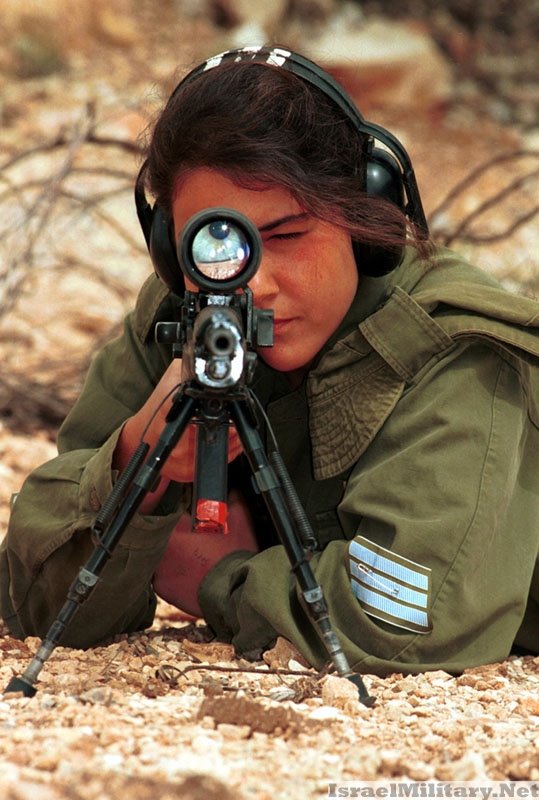
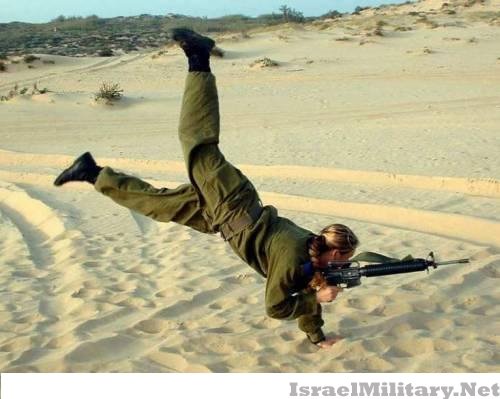
Hawt.
Here's a representative sample:

I'm not too wild about it, actually. I think my original post did a much better job with the same material. I've got a lot more pictures than they do, for one thing. And also, the Maxim spread is noticeably lacking chicks with guns.
To wit...
Hawt.
Tuesday, June 19, 2007
Saturday, June 16, 2007

Thursday, June 14, 2007
FEAR AND LOATHING ON MY LUNCH BREAK
Today for lunch I drove aimlessly around Seattle, stopped for gas, and then decided to grab a burger and run home. While waiting for my order at Kid Valley, a local burger chain, I was joined on my bench by an alterna-chick who introduced herself as Laura. She just started chatting. Seems she was from Connecticut orignally, and moved to Seattle for the overcast skies. Thus, she hated the scorching 63 degree day we're enjoying. She asked what I did for a living, and so I told her: I work at a place called Artist Trust, which gives grants to artists. As it turns out, she's an oil painter. Well, she used to be an oil painter. Now she's in a band. Do we give money to bands?
We sure do, I said.
She pulled off her sunglasses. Her eyeliner was heavy and smudged. She had a mark over her left eye that looked like a bruise or a dried scab. As I looked her over, I noticed a lot of bruises and dried blood.
God, I have to tell my friend about this. We're staying at the Wallingford Inn [a hotel about five blocks away that hosts an average of one double homicide a month].
Do you think you could give me a ride up the hill, she asked. It's so hot.
Sure, I said good-naturedly, fantasizing about an alterna-chick threeway.
That's so nice, she said. My fish and chips should be right up.
The cashier called the next order. Angie!
I thought, wouldn't it be funny if that was her.
Laura ran up to grab her order. Okaaay...
On the way out to the car, she said, my boyfriend is a bass player. You've probably heard of him. I didn't ask his name.
She talked the whole way, as I tried to figured out how to get to the hotel, which was situated practically on an exit from Interstate 99, thus very hard to approach from the the wrong direction. She asked no questions, even as I drove aimlessly toward what could well have been a dump for all she knew.
Finally, we found our way there. You should just park in front of my room, she said.
There was a fire truck in front, so I parked around the back.
Do you smoke crack, Laura asked me.
No, I said, and I was suddenly very proud of myself.
Are you a cop, she asked.
No, I said, starting to feel a little ashamed.
You don't look like a cop. You don't act like a cop. Are you cop?
I should have asked you that first, I guess.
It's not going to get you into trouble to talk about crack to a cop.
Are you a cop?
No, I said. Just a writer.
I helped her carry her groceries to her room. An ambulance joined the fire truck in front. She pounded on the door of room 28. No answer. She pounded again.
Ray! she pleaded.
Oh fuck, I thought. She's going to ask if she can come to my place.
Thank god, the door opened. I didn't see the guy -- I was looking at the squalor, so I only caught a glance at a tatooed upper arm as the guy disappeared, down the foyer and into the bathroom. Was he wearing a towel?
I brought my friend Dave, she said. He's going to give us a trust fund.
Don't let him in! Ray yelled.
I looked around. Pipes and garbage were everywhere. My place is a mess, too. But there's a difference in spirit.
I should probably get out of here, I said, thinking I was very likely to get mugged for the $60 in my wallet. Do you want to write down my work's web site address?
Ray, do you have a pen, she called?
Don't come in here! Ray responded.
I have a pen, I said. She took down my work's web site, phone number, and my name: Miguel. Then I left.
I should have gotten a photo. Next time I hang out with a crack girl, for sure.
Today for lunch I drove aimlessly around Seattle, stopped for gas, and then decided to grab a burger and run home. While waiting for my order at Kid Valley, a local burger chain, I was joined on my bench by an alterna-chick who introduced herself as Laura. She just started chatting. Seems she was from Connecticut orignally, and moved to Seattle for the overcast skies. Thus, she hated the scorching 63 degree day we're enjoying. She asked what I did for a living, and so I told her: I work at a place called Artist Trust, which gives grants to artists. As it turns out, she's an oil painter. Well, she used to be an oil painter. Now she's in a band. Do we give money to bands?
We sure do, I said.
She pulled off her sunglasses. Her eyeliner was heavy and smudged. She had a mark over her left eye that looked like a bruise or a dried scab. As I looked her over, I noticed a lot of bruises and dried blood.
God, I have to tell my friend about this. We're staying at the Wallingford Inn [a hotel about five blocks away that hosts an average of one double homicide a month].
Do you think you could give me a ride up the hill, she asked. It's so hot.
Sure, I said good-naturedly, fantasizing about an alterna-chick threeway.
That's so nice, she said. My fish and chips should be right up.
The cashier called the next order. Angie!
I thought, wouldn't it be funny if that was her.
Laura ran up to grab her order. Okaaay...
On the way out to the car, she said, my boyfriend is a bass player. You've probably heard of him. I didn't ask his name.
She talked the whole way, as I tried to figured out how to get to the hotel, which was situated practically on an exit from Interstate 99, thus very hard to approach from the the wrong direction. She asked no questions, even as I drove aimlessly toward what could well have been a dump for all she knew.
Finally, we found our way there. You should just park in front of my room, she said.
There was a fire truck in front, so I parked around the back.
Do you smoke crack, Laura asked me.
No, I said, and I was suddenly very proud of myself.
Are you a cop, she asked.
No, I said, starting to feel a little ashamed.
You don't look like a cop. You don't act like a cop. Are you cop?
I should have asked you that first, I guess.
It's not going to get you into trouble to talk about crack to a cop.
Are you a cop?
No, I said. Just a writer.
I helped her carry her groceries to her room. An ambulance joined the fire truck in front. She pounded on the door of room 28. No answer. She pounded again.
Ray! she pleaded.
Oh fuck, I thought. She's going to ask if she can come to my place.
Thank god, the door opened. I didn't see the guy -- I was looking at the squalor, so I only caught a glance at a tatooed upper arm as the guy disappeared, down the foyer and into the bathroom. Was he wearing a towel?
I brought my friend Dave, she said. He's going to give us a trust fund.
Don't let him in! Ray yelled.
I looked around. Pipes and garbage were everywhere. My place is a mess, too. But there's a difference in spirit.
I should probably get out of here, I said, thinking I was very likely to get mugged for the $60 in my wallet. Do you want to write down my work's web site address?
Ray, do you have a pen, she called?
Don't come in here! Ray responded.
I have a pen, I said. She took down my work's web site, phone number, and my name: Miguel. Then I left.
I should have gotten a photo. Next time I hang out with a crack girl, for sure.
Wednesday, June 06, 2007
Over at The Plank, Jason Zengerle has some idiosyncratic expectations of our next president:
Indeed, even in his acting career, [Fred] Thompson gives the impression that he's content to mail it in. Check out his body of work over at IMDB. He's always playing supporting roles or is part of an ensemble. Has the guy ever carried a film, much less a TV show (or, for that matter, embarked on an Apocalpyse Now-type project that drove him insane and left him almost dead)?
Werner Herzog for President.
Indeed, even in his acting career, [Fred] Thompson gives the impression that he's content to mail it in. Check out his body of work over at IMDB. He's always playing supporting roles or is part of an ensemble. Has the guy ever carried a film, much less a TV show (or, for that matter, embarked on an Apocalpyse Now-type project that drove him insane and left him almost dead)?
Werner Herzog for President.
Sunday, June 03, 2007

Saturday, June 02, 2007

Thursday, May 24, 2007
Monday, May 07, 2007
Sunday, May 06, 2007

Friday, May 04, 2007

Friday, April 27, 2007

Saturday, March 31, 2007
Wednesday, March 28, 2007
Thursday, March 22, 2007

Friday, March 16, 2007

Wednesday, March 14, 2007
Wednesday, March 07, 2007
Friday, March 02, 2007

Thursday, March 01, 2007
Sunday, February 25, 2007
LIVEBLOGGING THE 2007 OSCARS
I've decided not to watch them this year.
5:50 Where'smy remote control?
6:00 Did the oscars start at 5:30? Best Supporting Actir alkreeadt. Alan Arkn -- good. He's my sentimental favorite.I hopoe Peter O'Toole wins Best Actor. I saw Becket this weekend. I had seen it in hiotsory class in high school, and liked it a lot. Everything about the movie was great. O'Toole and Richard Burton give lively perforances. And yet I was bored senseless. A shame. There was a homoeroticism that couldn't have been accidental, with Buton towling off O'Toole, for example, or O'Toole complaianing about a sore rear end after a night of carousing with O'Toole. The men were famous wastrels, and I cannot beleive they didn't know the implications of their dialogue. O'Toole is a standout, of course. When he weeps over the end if his friendship with Burton, I teared as well. It's sshame the movie wasn't shorter.
Sometime between 6:15 and like maybe 6:40 Oy my god. Al Gore is totally running for president. I wonder, thoguht. He's following Obama's show of making some joke announcement on an entertainment rogram, so it's like he'd doing a cover version. But a while ago I read an artitcle that predicted if Gore was thin and clean-shaven at the Oscars, then he was running. And so he was. Still, I support barack Obama. I woujld suipport a Gore/Obama ticket, although I hope it doesn't come to that. I should call somebody.
Sometime between 6:20 and like maybe 6:45 No, I guess I won't.
7:00 Meryl Streep is a good actress. I thought she was totally tharing down Anne Hathaway and that other girl. Cute skit.
7:09 Oh, I've been sdrinking. As an acto of comendy, I'klk not be correcting sopelling errors inthese posts,.
7:10 Herscholdt Award? Public serviuce is for gfags.
7:12 Ahh... Gweneth. Sigh...
7:13 I had kind of a disturbing weekend. That just occired to me.
7:25 Isn't it a little... arrogant that Guisepe Tornatore would score a montage of tribute to international cinema with the famous score from one of his own movies?
7:28 I'm bored, just like I was bored during the inteminable previews in front of Becket. why are movies sdo boring? I hate movies.
7:29 I guess I should say foreign movies. God, I am such a redneck.
7:30 I was pretty impressed by all the avaiulable parking on Capitol Hill last night. My friend Monica comments, I guess this is what it is like when you start drinking at 7:20 at night.
7:31 And on Friday, my friend Beth drank me under the table. Also, the gut who won best foreign film, I think, he was hyperventialting. It was weak and pathetic. Fool.
7:32 Christ, Ellen Degeneres sucks. I think the best recent oscar host was Steve Martin. I liked his joke about kidnapping an eight-year-old and forcing him to watch the Two Towers.
7:34 Bets supporting Actress. I don't think I've seen any of these movies. I saw Little Miss Sunshine. I liked the little girl. I hoipe she wins. She was cute earlier. George Cloony is so dreamy...
7:41 I was seriously plannig on not watch8ng the OScars again this year. And yet, here I am.
7:42 I winoudl love to watch Eva Green and Gabrial Garcia Bernal have sex. I can;t keep watching them. It; like staring into Sex's Sun.
7:48 Al Gore it toally running for President. Go Obama.
7:50 Clint Eastwood is every bit the Ennio Morricone fan as the rest of us. This is a very moving tribute to Il Maestro. Morricon'e new song is not that great. The music would be better served without lyrics. "Here's to You" not excepted, Morricone's music need no words.
8:46 The Memorial montage was especially sad this year, with Alida Valli's death. And Phillippe Noirett's. And James Doohan. Peter Boyle. And of course. Robert Altman. Tough year.
8:52 Best Actress. I wish there was a way for Helen Mirren to win this every year. She is so beautiful.
8:54 Horray!
9:07 Spielberg, Lucas and Coppola? The fix is in for Scorcese.
I've decided not to watch them this year.
5:50 Where'smy remote control?
6:00 Did the oscars start at 5:30? Best Supporting Actir alkreeadt. Alan Arkn -- good. He's my sentimental favorite.I hopoe Peter O'Toole wins Best Actor. I saw Becket this weekend. I had seen it in hiotsory class in high school, and liked it a lot. Everything about the movie was great. O'Toole and Richard Burton give lively perforances. And yet I was bored senseless. A shame. There was a homoeroticism that couldn't have been accidental, with Buton towling off O'Toole, for example, or O'Toole complaianing about a sore rear end after a night of carousing with O'Toole. The men were famous wastrels, and I cannot beleive they didn't know the implications of their dialogue. O'Toole is a standout, of course. When he weeps over the end if his friendship with Burton, I teared as well. It's sshame the movie wasn't shorter.
Sometime between 6:15 and like maybe 6:40 Oy my god. Al Gore is totally running for president. I wonder, thoguht. He's following Obama's show of making some joke announcement on an entertainment rogram, so it's like he'd doing a cover version. But a while ago I read an artitcle that predicted if Gore was thin and clean-shaven at the Oscars, then he was running. And so he was. Still, I support barack Obama. I woujld suipport a Gore/Obama ticket, although I hope it doesn't come to that. I should call somebody.
Sometime between 6:20 and like maybe 6:45 No, I guess I won't.
7:00 Meryl Streep is a good actress. I thought she was totally tharing down Anne Hathaway and that other girl. Cute skit.
7:09 Oh, I've been sdrinking. As an acto of comendy, I'klk not be correcting sopelling errors inthese posts,.
7:10 Herscholdt Award? Public serviuce is for gfags.
7:12 Ahh... Gweneth. Sigh...
7:13 I had kind of a disturbing weekend. That just occired to me.
7:25 Isn't it a little... arrogant that Guisepe Tornatore would score a montage of tribute to international cinema with the famous score from one of his own movies?
7:28 I'm bored, just like I was bored during the inteminable previews in front of Becket. why are movies sdo boring? I hate movies.
7:29 I guess I should say foreign movies. God, I am such a redneck.
7:30 I was pretty impressed by all the avaiulable parking on Capitol Hill last night. My friend Monica comments, I guess this is what it is like when you start drinking at 7:20 at night.
7:31 And on Friday, my friend Beth drank me under the table. Also, the gut who won best foreign film, I think, he was hyperventialting. It was weak and pathetic. Fool.
7:32 Christ, Ellen Degeneres sucks. I think the best recent oscar host was Steve Martin. I liked his joke about kidnapping an eight-year-old and forcing him to watch the Two Towers.
7:34 Bets supporting Actress. I don't think I've seen any of these movies. I saw Little Miss Sunshine. I liked the little girl. I hoipe she wins. She was cute earlier. George Cloony is so dreamy...
7:41 I was seriously plannig on not watch8ng the OScars again this year. And yet, here I am.
7:42 I winoudl love to watch Eva Green and Gabrial Garcia Bernal have sex. I can;t keep watching them. It; like staring into Sex's Sun.
7:48 Al Gore it toally running for President. Go Obama.
7:50 Clint Eastwood is every bit the Ennio Morricone fan as the rest of us. This is a very moving tribute to Il Maestro. Morricon'e new song is not that great. The music would be better served without lyrics. "Here's to You" not excepted, Morricone's music need no words.
8:46 The Memorial montage was especially sad this year, with Alida Valli's death. And Phillippe Noirett's. And James Doohan. Peter Boyle. And of course. Robert Altman. Tough year.
8:52 Best Actress. I wish there was a way for Helen Mirren to win this every year. She is so beautiful.
8:54 Horray!
9:07 Spielberg, Lucas and Coppola? The fix is in for Scorcese.
Sunday, February 18, 2007
Saturday, February 17, 2007

Wednesday, February 14, 2007

Saturday, February 03, 2007


Subscribe to:
Posts (Atom)


